
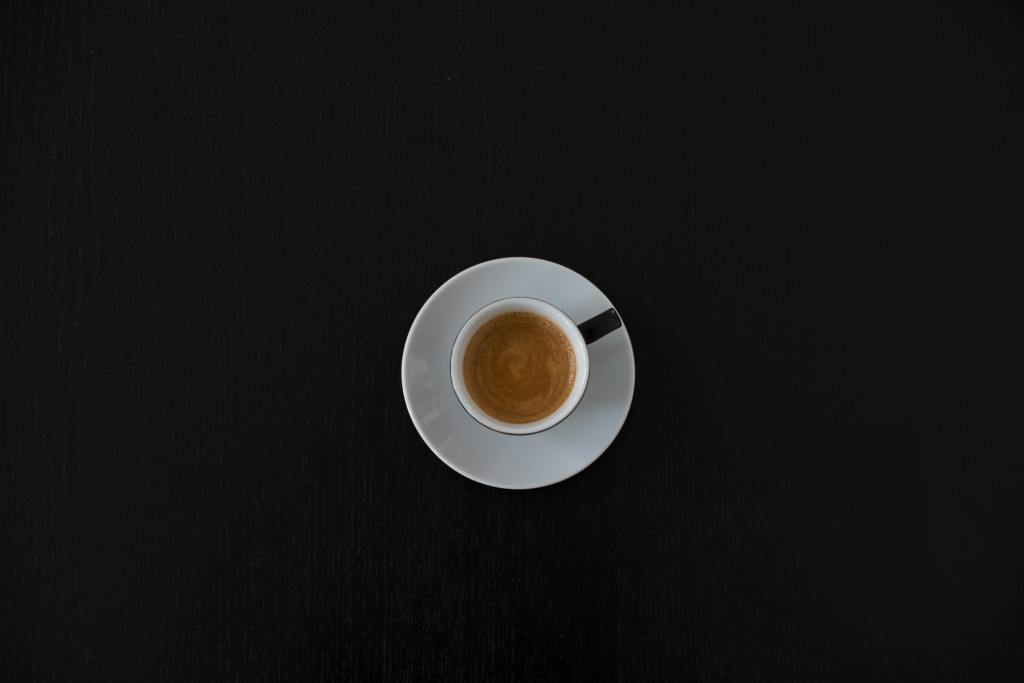
The feeling of waking up, shabby and tired and malcontent with sleep-deprivation, has become a constant state of being at Forward. Not rarely, in those troublesome waking moments of headaches and lack of willpower, do I face Camus’ great question: “Should I kill myself or make a cup of coffee?” Then – ah! – what joy to brew that little black cup, feel the delightful smell of coffee fill the air and transform the dirty kitchen of my student residence into a happy suicide-free zone. Perhaps even walk to the rooftop, sit down in the morning sun, feel the morning breeze on my skin, and sip those God-given sips of vigorous yearnful coffee.
This might sound exaggerated, but bear in mind: I come from Scandinavia. During the dark days of winter, I genuinely believe coffee is our most important suicide-prevention. Of course, there are plenty of those among us who don’t participate in this coffee-cult. We have tea-drinkers and non-drinkers who walk shamelessly in our crowd, and while I do not wish them any harm, there is of course no doubt as to a coffee-drinker’s superiority.
This is, however, not stated lightly. How often have those days occurred where coffee is unavailable? Where must the day commence with coffee-headaches, cravings, and shortage-induced depression? Coffee is a passion that appeals to the romantic. It is a very delicate love-affair; a quiet life-affirmation firmly lasting a lifetime.
That being said, one begins to wonder slightly about this drink we are all so familiar with. So I took a little look into its history and a few studies about coffee.
Coffee-drinking originated in modern-day Somalia, Ethiopia, and Yemen. Several legends account of monks seeing birds nibble at red berries and becoming strangely vital, prompting them to try out the fruits themselves and experience the coffee-thrill. While these stories are likely apocryphal, coffee did spread from these regions and across the Middle East. Sufis started using coffee to concentrate during prayer, and coffee-houses emerged in the major Islamic cities. Some of these coffee-houses became important centres for Islamic life, arts, and thinking. As such, they were also central to the emergence of the public sphere and its participation in Islamic politics. While controversy also arose whether coffee was halal or haram, with occasional and temporary bans being imposed on its consumption, coffee established itself as an integral part of Islamic culture. Soon it was to spread to Europe, arriving in Italy in the 16th century.
While some studies have questioned if caffeine is good for us, it appears largely beneficial. This is not to say it isn’t addictive of course, but it’s a lovely addiction. If you ever came across that study where scientists gave caffeine, amphetamine and LSD to spiders, then look away. Indeed, the spiders got severely messed up by caffeine, but this turns out to be a very spider-specific thing. In humans, coffee has instead been associated with slower cognitive decline, and a reduced risk of Alzheimer’s. It has also been associated with lower risk of depression and anxiety (the coffee-suicide hypothesis might not be entirely off).
But beyond coffee as culture and as an antidepressant, I think there is a real philosophical matter at stake in this drink. Sure, it’s a central cultural element; nothing is as natural a context for meeting friends, going on dates, or having a one-to-one tutorial as over a cup of coffee. But besides this, coffee is private, delicate, and flabbergastingly fabulous. It is a source of both personal identity and personal perseverance. Whether you are the neurotic chain-drinker, the slow savourer of flavour, the type to want coffee injected into your veins in the morning, or the occasional social drinker. If you prefer regular black coffee, espressos or cappuccinos, if you neatly measure and grind your beans to make the perfect AeroPress, prefer the sound and smell and strength of the Moka-pot, or the roughness of the French press. Everyone has their own coffee-identity and their own coffee-memories. Coffee is both highly habitual and highly singular, providing ritualistic renewal to otherwise mundane habits. As long as coffee is still available, one can survive many calamities, many heartbreaks, and innumerable ill-prepared exams.
So, the next time you wake up and the kitchen window looks awfully tempting to dive through, keep on choosing coffee. (And if you don’t drink coffee – well, natural selection has its ways.)


Leave a Reply