
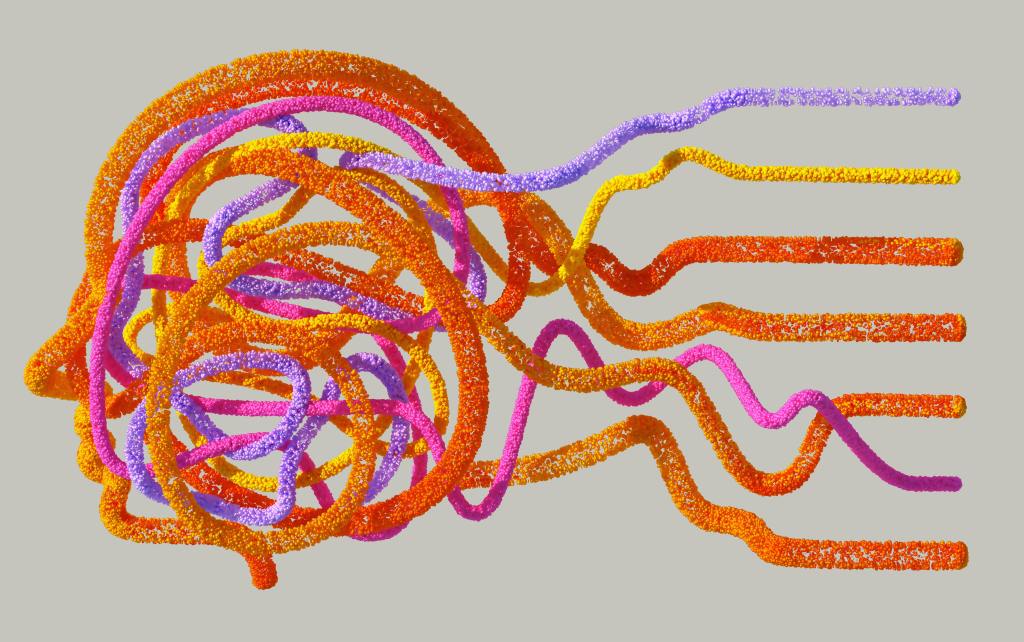
Psychedelics have become a hot topic. From being labelled as highly dangerous drugs that can make you crazy or jump out of a window, they are now at the forefront of psychiatric research. Nick von Christierson brought this topic to Forward College’s Lisbon campus, talking about his company Woven Science and psychedelic research at large.
Nick’s diagnosis of society is clear: we are facing a crisis in mental health that traditional psychotherapy and psychiatric drugs cannot cope with. As a species we’ve distanced ourselves from the natural world, leading to yet a collective crisis of consciousness or disconnectedness. Big pharma controls the drug market, and through the patenting and promotion of branded pharmaceutical drugs, they generate a multi-trillion-dollar industry more concerned with clients than with patients.
The solution? To take LSD, MDMA and shrooms.
Admittingly this sounds a little crazed. Perhaps especially when coming from someone whose original reason for promoting these drugs was taking them himself. While Nick did spend some time discussing the therapeutic potential of psychedelics, he appeared slightly too familiar with the topic to address the concerns most people probably have. Aren’t these dangerous hallucinogens?
The short answer is no. While not ‘safe’ per se if taken in uncontrolled environments, psychedelics are neither neurotoxic nor addictive (except for MDMA and ketamine). In fact, there was great interest in their therapeutic applications already during the 50’s and 60’s. But after a few psychologists decided to leave personality research behind and instead give the revolution a try, LSD and psilocybin escaped the labs and were distributed to young Americans, often hippies. The Harvard psychologist Timothy Leary has often been to blame for this, running a large and quirky psychedelic campaign across the country. When Nixon declared his ‘war on drugs’, he specifically declared war on LSD, and all research was driven underground, remaining so until the late 90’s.
Trials with psychedelics show that they can be efficient in treating a wide variety of disorders, ranging from depression to anxiety, PTSD and chronic pain. In contrast with current psychiatric drugs which are taken regularly, psychedelic treatment aims at one single session followed by therapy. The mystical experience induced by psychedelics appears to be key in aiding patients, rather than merely altering neurochemical imbalances. During the trip, patients experience heightened emotions, followed by integration of the experience through therapy. Many see this as addressing the deeper roots of mental illness compared to conventional drug-based treatments.
This merging of modern science with validations of mystical experiences is exciting. Not surprisingly, psychedelics have been used since time immemorial by various indigenous communities and are a form of knowledge and experience much alien to Western thinking. Typical of the experience is a sense of unity and wholeness in the universe, and the dissolvement of the ego.
Although Nick’s respect for the mystical experience at the heart of psychedelics and Indigenous peoples seems to run deep (Woven Science aims at giving 10% of its equity back to Indigenous communities), he does have a realistic take on things. In fact, much of his talk revolved around how to make a viable business model for psychedelics. It is interesting to see how this notion of psychedelics as intrinsically spiritual is juxtaposed with a highly capitalist understanding of how to implement them in society. The substances must be synthesised for an FDA-approvable format and commercialised as a viable treatment-option. Although using synthetic varieties is ideal for sparing natural habitats, the idea of democratisation of psychedelics through commercialization sounds questionable.
Psychedelics are seen as difficult to profit from, simply because there is a limit to how much one can charge for a single pill. Yet, a single MDMA session in Australia today costs 10.000$ (you’d be better off showing up to therapy with an ecstasy pill bought from your local dealer). Nick is quick to assert that the current market value of psychedelics of around 2,6 billion dollars is a mere ‘drop in the ocean’ compared to the multi-trillion dollar value of the entire drug market. However, this comes out as comparable to the individual market values of SSRI’s and benzodiazepines, despite the illegality of psychedelics in most countries. By 2032, this market value is expected to increase to around 7 billion. The dichotomy Nick makes between the medical-industrial complex and psychedelics therefore doesn’t seem quite in tune with reality. Whether big pharma will eventually come to drive the psychedelic market or not (there’s an ongoing competition for the intellectual property of psychedelics-derived substances), this development seems primarily commercialised, not democratised.
Nonetheless, we are likely to see psychedelic therapy available in the relatively near future. Although unforeseen events could still halt the process, the FDA is expected to legalise MDMA for therapy this year and psilocybin in a few years. Europe is likely to follow. Despite the dilemmas of commercialisation, this is a very exciting development. As Nick stated, there is no magical pill for everything, but hopefully, we will obtain a fresher understanding of psychotropics than being mere drugs. In the meanwhile, for those who are interested in trying psychedelics out, legal options can be found in the Netherlands and a few US states. Illegal options are of course, not recommendable, but if you do happen to go down that route, take care and prepare yourself well. And if picking mushrooms, make sure to read your mushroom field guide thoroughly.

 The Grad Media
Leave a comment